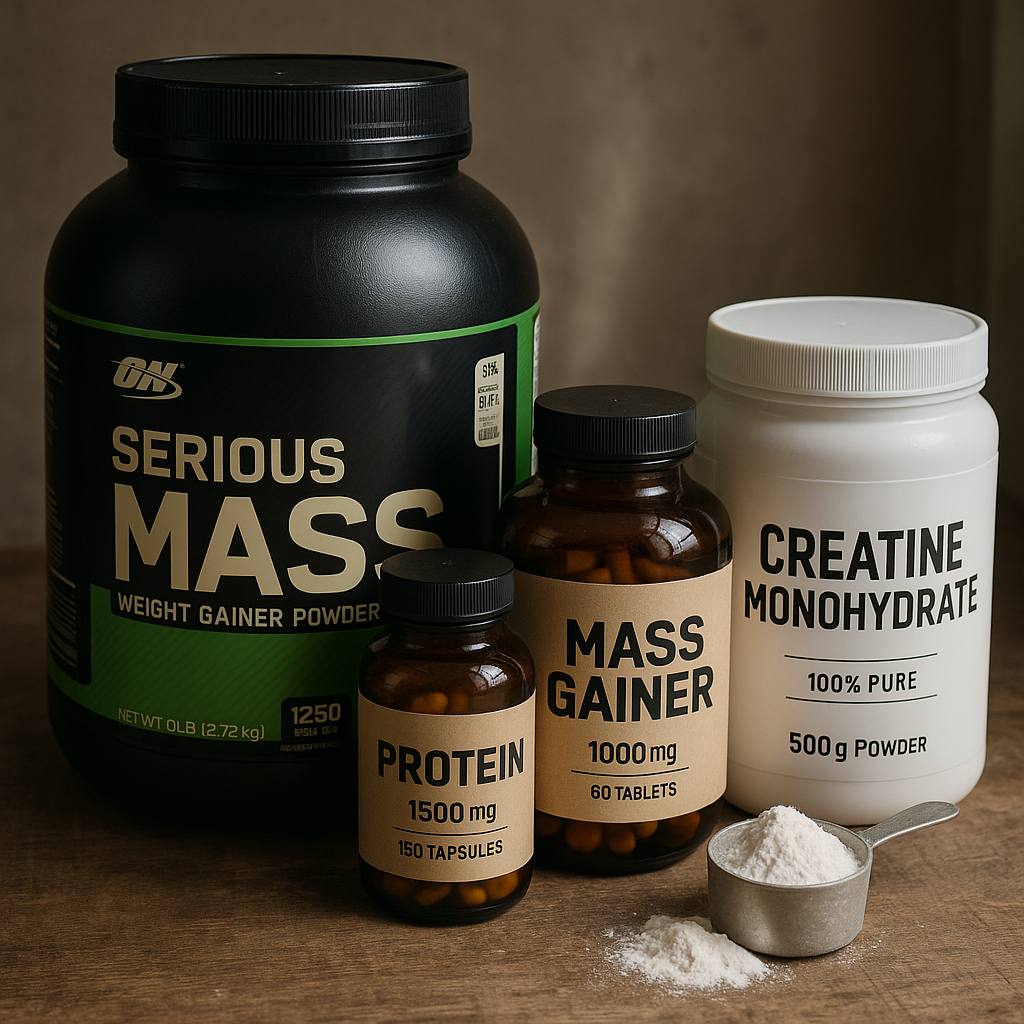
Gaining weight sounds simple—eat more than you burn—but many people struggle to do it consistently. Busy schedules, low appetite, high activity levels, digestive sensitivity, and limited meal prep time can make a calorie surplus hard to maintain. That’s where weight gain supplements can help: they don’t replace real food, but they can make hitting your daily calorie and protein targets more practical.
This guide breaks down the best weight gain supplements for lean mass and healthy weight gain, explains what to look for on labels, and includes evidence-based tips to minimize fat gain and stomach issues.
What “Best” Means for Weight Gain Supplements
The best supplement for weight gain depends on why you’re under your target weight and how you’re training. In general, the most useful products do one (or more) of the following:
- Increase daily calories without requiring more cooking or chewing.
- Improve muscle-building capacity (training performance, recovery, strength progression).
- Support health so you can train and eat consistently (gut comfort, appetite, sleep, nutrient status).
For most lifters, the winning combination is: a consistent calorie surplus, adequate protein, progressive resistance training, and a few targeted supplements.
Best Weight Gain Supplements (Ranked by Practical Impact)
1) Mass Gainer Powders (High-Calorie Shakes)
Best for: hard gainers, low appetite, people who struggle to eat enough calories from meals.
Mass gainers are calorie-dense blends—usually carbs + protein, sometimes with added fats, fiber, and micronutrients. They can be effective because they remove friction: one shake can provide 500–1,200+ calories.
What to look for:
- Moderate calories per serving (often better tolerated than mega-servings). Some brands label a “serving” as 2–4 scoops—consider starting with half.
- Protein quality (whey, whey isolate, milk protein, or a complete plant blend).
- Carb source you digest well (oats, maltodextrin, rice, or mixed carbs). If you bloat easily, avoid very high sugar alcohols or excessive fillers.
- Reasonable fat (too much fat can slow digestion and cause nausea in large shakes).
Pros:
- Fastest way to raise daily calories
- Convenient—useful for students, athletes, and busy professionals
- Easy to customize (add peanut butter, olive oil, oats, fruit)
Cons:
- Some formulas rely heavily on low-cost carbs (e.g., lots of maltodextrin)
- Can cause bloating if servings are too large
- Easy to overshoot calories and gain unnecessary fat if not tracked
2) Protein Powder (Whey, Casein, or Plant Protein)
Best for: increasing protein without adding much meal volume; lean bulking.
Protein powder isn’t inherently a “weight gain” supplement—but it helps you hit a daily protein target that supports muscle growth while you’re in a calorie surplus.
Top options:
- Whey protein (fast-digesting, high leucine)
- Casein (slower-digesting; useful before bed)
- Plant blends (pea + rice often improves amino acid profile)
Pros:
- Supports muscle gain when paired with training
- Easy to add to smoothies, oats, yogurt
- More cost-effective than many “mass” products
Cons:
- Not very calorie-dense unless you add carbs/fats
- Dairy-based powders may bother lactose-sensitive users (consider isolate or plant)
3) Creatine Monohydrate
Best for: strength, training performance, and lean mass support.
Creatine is one of the most researched supplements in sports nutrition. It helps increase phosphocreatine stores, improving high-intensity performance and supporting strength progression—key drivers of muscle gain.
How it helps weight gain: often increases body weight modestly (commonly due to increased water in muscle cells) and can support greater training volume over time.
Pros:
- Excellent evidence base
- Affordable and easy to use
- Synergistic with resistance training
Cons:
- Some people experience mild stomach upset if taken in large single doses
- Scale weight increase can be misunderstood as “fat gain”
4) Omega-3 Fish Oil (EPA/DHA)
Best for: overall health, recovery support, and improving diet quality during a bulk.
Omega-3s don’t directly add calories in meaningful amounts, but they can support training consistency, joint comfort, cardiovascular health, and overall nutrition status—important when you’re pushing harder in the gym and eating more.
Pros:
- Health-supportive during higher training loads
- May aid recovery and inflammation management for some athletes
Cons:
- Quality varies; rancid oils are common in cheap brands
- Can cause “fish burps” (enteric-coated capsules may help)
5) Carbohydrate Powders (Dextrose, Cyclic Dextrin, Cluster Dextrin)
Best for: adding calories around training without heavy fullness.
If you’re already hitting protein but still can’t eat enough, carb powders can raise calories with minimal chewing. Many athletes use them pre-, intra-, or post-workout for performance and recovery.
Pros:
- Easy calories, often easier on the stomach than huge meals
- Helpful for high-volume training or sport performance
Cons:
- Low micronutrient density compared with whole-food carbs
- Can be too “fast” for some appetites and blood sugar tolerance
6) Digestive Enzymes (Optional, Situational)
Best for: people who bloat easily when increasing calories, especially from dairy or high-carb shakes.
When you push calories up, GI discomfort is a common bottleneck. Digestive enzymes (like lactase for lactose) may improve comfort and consistency.
Pros:
- May reduce bloating and improve tolerance of higher intake
Cons:
- Not necessary for everyone
- Quality and enzyme dosing vary widely
Quick Comparison Table: Which Supplement Fits Your Goal?
| Supplement | Primary Benefit | Best For | Main Watch-Out |
|---|---|---|---|
| Mass gainer | High calories + protein | Hard gainers, low appetite | Bloating, overshooting calories |
| Protein powder | Hit protein targets | Lean bulking, busy schedules | Not calorie-dense alone |
| Creatine monohydrate | Strength + training output | Most lifters | Water-weight confusion, GI upset |
| Omega-3 (EPA/DHA) | Health + recovery support | High training loads | Rancid oils, fish burps |
| Carb powder | Easy extra calories | Athletes, high-volume training | Low nutrients vs whole food |
| Digestive enzymes | Better tolerance of surplus | Sensitive stomachs | May not help; variable quality |
How to Choose a Weight Gain Supplement (Label Checklist)
Target a Realistic Calorie Surplus
A smart bulk is usually a small to moderate surplus that you can sustain. Supplements work best when they help you add consistent calories—without creating digestive chaos.
Prioritize Protein Quality and Total Daily Intake
For muscle gain, protein matters. Choose a powder with a strong amino acid profile and aim to distribute protein across meals. If you tolerate dairy poorly, consider whey isolate or a plant blend.
Watch Serving Sizes and “Hidden” Scoops
Many gainers list 800–1,200 calories per serving—but that might mean 2–4 scoops. Start with ½ serving and titrate up over a week to improve digestion and appetite.
Minimize Fillers if You’re GI-Sensitive
If you bloat easily, look for simpler formulas, moderate fiber, and avoid excessive gums/sugar alcohols. A blender shake made from whey + oats + banana can be gentler than some ultra-processed gainers.
Expert Tips to Gain Weight Without Unwanted Fat
- Use a “calorie escalator” approach: add 150–250 calories/day for 7–10 days, then reassess weight and appetite.
- Liquid calories are your friend: smoothies are often easier than forcing extra meals.
- Pair supplements with progressive training: the best gainer shake won’t build muscle without resistance training and progression.
- Keep meal quality high: supplements should support a foundation of whole foods (rice, potatoes, oats, dairy/alternatives, meat/fish/legumes, fruit, olive oil, nuts).
- Track weekly averages, not daily scale swings: creatine, sodium, and carb intake can shift water weight.
Best Ways to Take Weight Gain Supplements (Simple Routines)
Beginner “Lean Bulk” Stack
- Protein powder: 1 scoop as needed to hit your protein goal
- Creatine monohydrate: 3–5 g daily
- Optional carb powder: around workouts if you struggle to eat enough
Hard Gainer “High-Calorie” Stack
- Mass gainer: start with ½ serving daily, then increase
- Creatine monohydrate: 3–5 g daily
- Digestive enzyme or lactase: if dairy-based shakes cause issues
FAQs About the Best Weight Gain Supplements
1) Do weight gain supplements make you gain fat?
They can if they push you into too large a calorie surplus. Used strategically (small surplus + training), supplements can support mostly lean mass gain, but some fat gain is normal in most bulks.
2) Is a mass gainer better than whey protein?
It depends on your bottleneck. If you can’t hit calories, a mass gainer is more effective. If calories are fine but protein is low, whey (or a plant protein) is usually the better and simpler choice.
3) What’s the best supplement for skinny guys trying to bulk?
Most “hard gainers” do best with a combination of higher daily calories (often via a gainer shake), adequate protein, and creatine monohydrate paired with consistent strength training.
4) How long does it take to see results?
Many people see scale weight changes within 2–4 weeks once they maintain a consistent surplus. Visible muscle changes often take longer and depend heavily on training quality, sleep, and overall adherence.
5) Are weight gain supplements safe?
Most common options (whey, creatine, carbs, omega-3s) are generally well-tolerated for healthy adults when used as directed. If you have a medical condition, take medications, or have kidney/liver concerns, consult a qualified clinician before starting new supplements.
Bottom Line: The Best Weight Gain Supplements Are the Ones You’ll Use Consistently
If you want the highest ROI, start by making your calorie surplus easier: a mass gainer or homemade smoothie can do that fast. Add protein powder to reliably hit protein targets, and include creatine monohydrate to support strength and training progression. From there, layer in optional supports like omega-3s and digestive enzymes based on your needs.
Soft next step: If you’d like, share your height, weight, training schedule, and appetite level, and I can suggest a simple supplement + meal structure that fits your routine and budget.